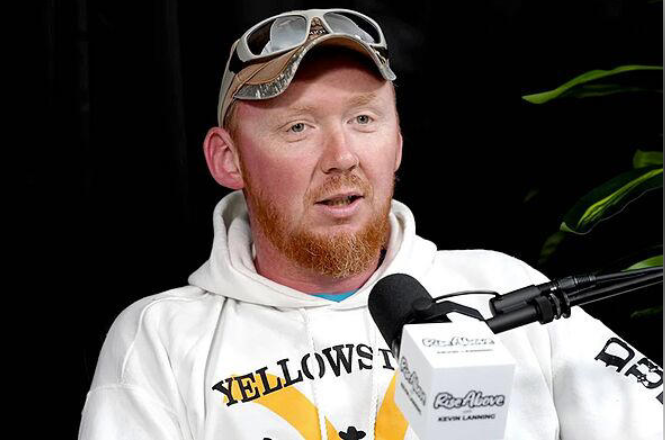
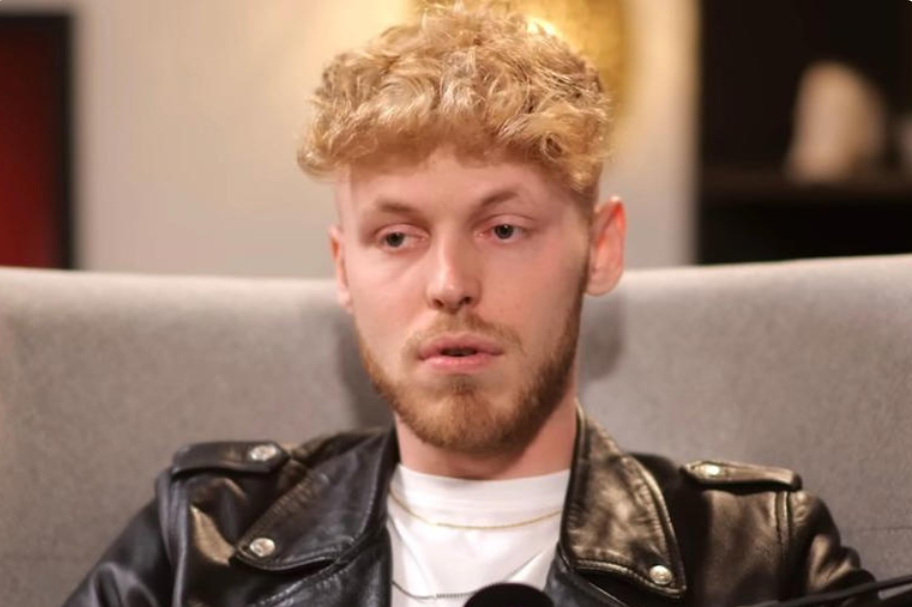
“When we think of psychopaths,” says 26-year-old Loïc De Marie, “we think of Hannibal Lecter, serial killers, or cannibals. But most of us never kill anybody.” Loïc, who is from Belgium, always knew he was different to other children, but his psychopathy was only diagnosed three years ago.
Speaking on SBS’s Insight programme, Loïc describes how for him, empathy is like music: “Everybody in the room can understand the words of the music and the melody … I don’t hear the melody — I don’t understand it.”
Loïc describes how one pivotal incident showed how his responses are vastly different from the average person’s. He and his little sister were playing near a swimming pool in their back garden when she suddenly fell in: “She was drowning, and I looked at her, and that was kind of troubling,” he said.
But while most of us might jump to help without thinking, Loïc’s response was quite unexpected. After thinking for a short time, he found a toy plastic gold club which he held out for his sister to grab on to.
“I didn’t jump into the pool because I didn’t want my clothes to get wet,” he explained.

Loïc De Marie© People Are Deep/Youtube
In an interview with UNILAD, Loïc explained that the incident gave his mother a chilling insight into his personality: “My mom came out of the house and she’s yelling, screaming that, why didn’t I jump into the pool? And I answered, ‘Mom, my clothes are clean’.
“And she was like, ‘What the f**k is wrong with this kid?’ That was the first time my mum understood that I was different.”
At around the same time, one of the Loïc’s classmates died in a car accident: ”Everybody was crying,” he recalled. “This [was] the first time I understood that emotions are different with me [because] the look that the teacher gave me was, ‘Why is this kid not crying?'”
As he grew older, Loïc would increasingly get involved in violent confrontations: “A guy was looking me in the eyes, some rivalry between men… and one day, I came to school with a baseball bat,” he said. “I would have smashed his head like a watermelon.”
While he could potentially have faced charges for his actions, Loïc says, one way or another, he always managed to wriggle out of trouble: “I got a lot of chances, and I always found myself OK.”

Loïc De Marie© insightsbs/Instagram
Loïc said that what defines a psychopath is the complete lack of care about the consequences of their actions, no matter what impact they might have on others.
He told the People Are Deep podcast that he lives completely in the moment: “No matter what I’ve done, never. I don’t regret anything. I’m going to live once, and I’m going to do it for myself. I don’t have any regret.”
He added that he has never felt anxiety, depression, or guilt. He finds it easy to stay calm under pressure and make ruthless decisions without emotional pain.
While he connects some of his condition to his home life, he believes that, ultimately, he was born a psychopath.
He recalls how following his parents’ divorce, his mother turned to drinking and tried to take her own life when he was around eight: “At the age, I think, of eight, she tried to kill herself,” Loïc says. “In my adolescence, my mom was drinking from maybe my eight years to 16 years.
“And she was aggressive, she was absent sometimes and it [had] an impact on me.
“She was saying to me that I’m not her son anymore. And she was this kind of mean. This is the kind of thing that with psychopathy, it changes you. With psychopathy, you are born that way, but it doesn’t help this kind of behaviour from a mother or a father.”
Loïc looks down on narcissists, saying that while all psychopaths are essentially narcissistic, not all narcissists are psychopaths: “Narcissists, they’re like us but not as good I think, because they need other people to fuel their ego,” he said. “With a psychopath, the ego is already fuelled.”
He admits: “In the past, I was very charming with a big smile, very empathetic in appearance, very manipulative. And I think that was dangerous for me and for others.”
Loïc admits that he has hurt a lot of people over the years, but his therapist is helping him find new ways to deal with people, even if his underlying feelings have not changed: “I cannot change my behaviour,” he says, “Sometimes you need to fake it.”