by James Crisp
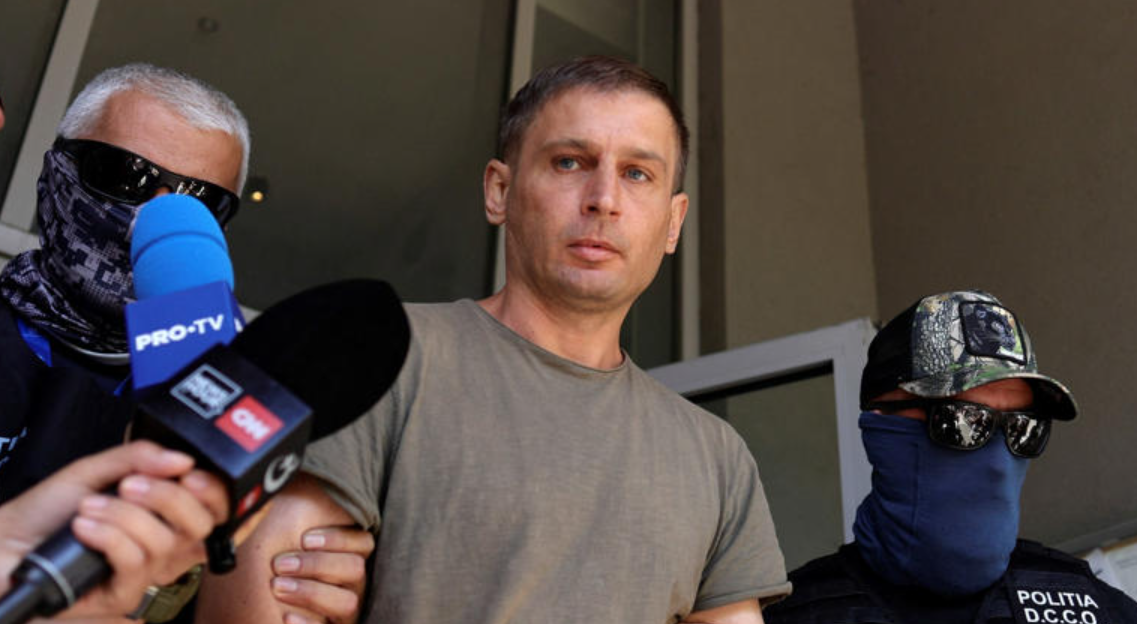
Romania has arrested a Russian man for spying on its military bases, thwarting an attempted sabotage plot, Bucharest’s intelligence service has said.
The Russian, who lives in Romania, was arrested in a joint operation with other foreign intelligence agencies after he took photographs of sensitive military sites, including bases used by Nato.
On Tuesday, the Romanian Intelligence Service (SRI) said that the Russian citizen had been under surveillance since February.
The 40-year-old was under the direct co-ordination of a Russian handler through encrypted online messaging services, it said.
Several sabotage attacks in Europe have been carried out by Russian-speaking proxies directed by handlers in Russia who offered them money and instructions online.
The suspect was instructed to collect and monitor military information, the SRI said.
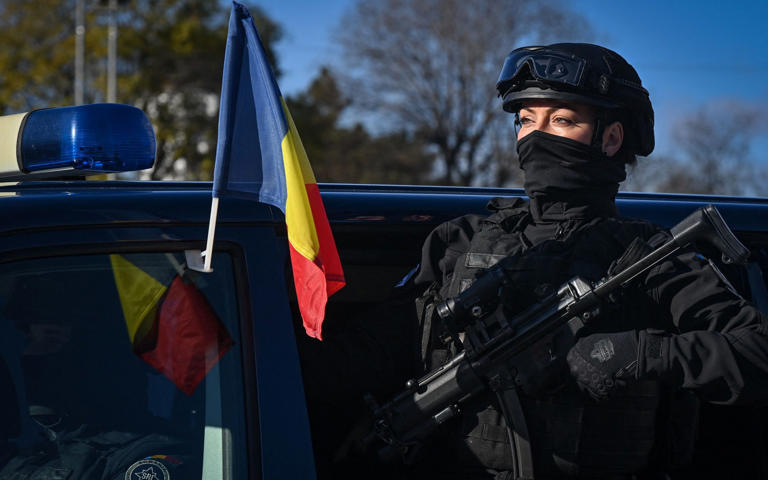
Similar plots were foiled by joint-intelligence operations in Romania in 2024 and 2025 – AFP/Daniel Mihailescu
Local media reported that the suspect photographed national and Nato military bases and the movement of troops and equipment across the country.
The investigation revealed that the suspect was instructed to document strategic military assets, including Ukrainian Antonov cargo aircraft while they were in Romania.
Europe has accused Moscow of waging a hybrid campaign of sabotage, cyberattacks and disinformation targeting supporters of Kyiv’s war effort.
The latest sabotage operation follows a thwarted drone attack at Leipzig-Halle Airport that ratcheted up tensions between Berlin and Moscow.
The Kremlin said on Tuesday that Vladimir Putin had assured Donald Trump, during an hour-long phone call aimed at ending the war in Ukraine, that Moscow did not harbour aggressive intentions toward Europe.
Russia has repeatedly denied any involvement in sabotage. Its embassy in Bucharest did not immediately respond to a request for comment from Reuters on Tuesday.
The SRI said the Russian citizen’s actions repeated the pattern seen in previous cases, where vulnerable people were targeted to carry out sabotage missions for Moscow.
“The Russian citizen was instructed by an intermediary to make photo-video materials with targets of strategic military interest, including Ukrainian Antonov cargo aircraft during their presence on the national territory,” the SRI said.
“The investigation also revealed that the Russian Federation continues to use persons from vulnerable categories to carry out such illegal activities.”
Prosecutors ordered the arrest of the man on Sept 8. They have requested a 30-day preventative arrest warrant for the suspect on charges of endangering national security.
The joint counter-intelligence operation prevented any sabotage. Similar plots were foiled in Romania in 2024 and 2025.
Claims of intensified sabotage campaign
During the summer, European politicians accused Russia of intensifying its sabotage campaign against Europe, with military and defence sites the main target.
The German government said that Russia was responsible after drones packed with explosives were discovered at Leipzig’s airport, which is used by Ukraine to transport military equipment.
In August, there was a series of suspicious fires at defence facilities in Bulgaria, Italy and Estonia, where a factory supplying drones to Ukraine went up in flames.
Estonia’s prime minister said the possibility of Russian sabotage was being taken seriously.
In Slovakia, police said they had prevented an arson attack on a Ukrainian-owned drone manufacturer. The company blamed Russia and police arrested three suspects they said were “following orders”.
The same month, there were fires at a company making helicopter components and another drone producer. Poland blamed the fires on Moscow.
Two Bulgarians were arrested for arson in Munich this September after throwing incendiary devices at a defence company from a car.
Experts believe the high concentration of sabotage is a response to Ukraine taking the war to Russia. Others think it is designed to pressure countries to stop supporting Kyiv.
Recommended
Con Coughlin: Putin’s hybrid warfare is calculated strategy, not desperation
Some say the campaign is designed to test Nato for weaknesses and countries’ willingness to respond to provocation rather than shutting off supplies to Ukraine.