
Story by Hiyah Zaidi
Near death experiences, as they are known, have been studied for decades.
The only way to truly find out what happens after death is to die — which is why accounts from people who have been pronounced as clinically dead before being brought back to life spark so much fascination and debate.
In one account, a woman who was pronounced dead for eight minutes has claimed that what see saw proves death is just an illusion.
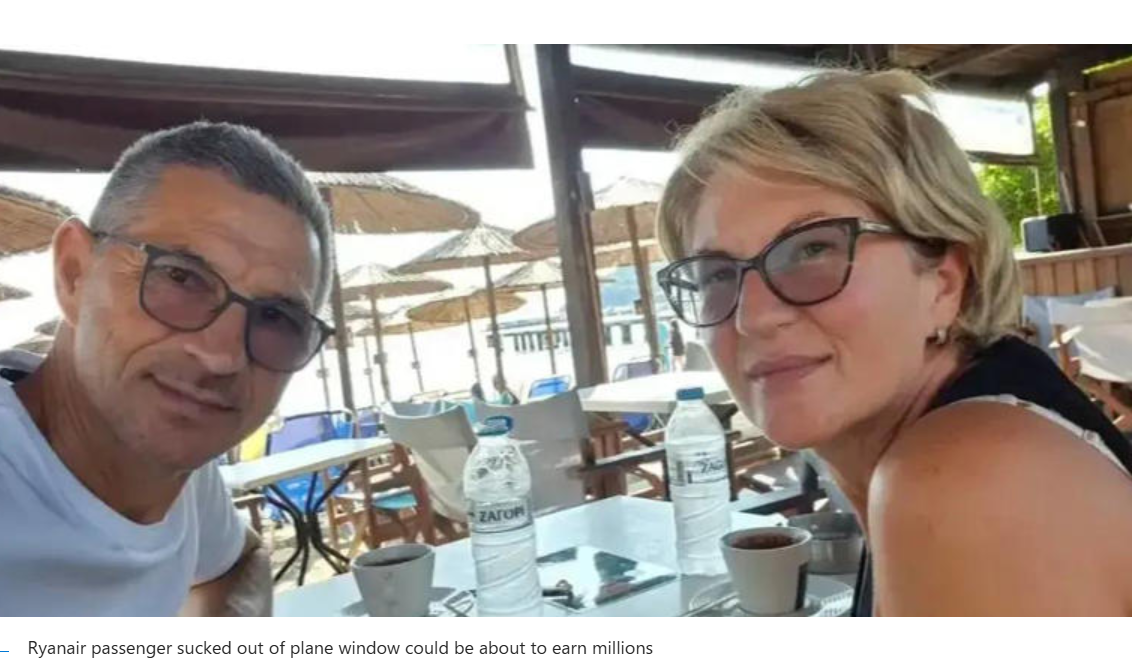
Brianna Lafferty, from Colorado, US, suffers from a rare neurological condition called myoclonus dystonia, which causes sudden, brief muscle jerks and contractions.
During one instance, she says that her body gave up and flatlined, and although she was pronounced as clinically dead, the 33-year-old claims her consciousness did not die with her.
Brianna said that – like many other accounts of NDEs – she had an out of body experience, where her soul floated above her body, but claims her soul then entered a realm where time did not exist.

(Picture: Jam Press/Brianna Lafferty)
She said: ‘I was suddenly separated from my physical body. I didn’t see or remember my human self. I was completely still, yet I felt fully alive, aware and more myself than ever before. There was no pain, just a deep sense of peace and clarity.’
She continued: ‘My thoughts instantly manifested into the afterlife. I noticed that our thoughts create a reality there – it just takes time – which is a blessing.
‘We’re able to change our negativity into positivity, turning this into reality. I feel empowered and trust life’s events, especially the hard ones’.
Although she was pronounced clinically dead for eight minutes, she said she felt like she had been gone for months. And that she made a life-changing realisation.
She said: ‘Death is an illusion because our soul never dies. Our consciousness remains alive. And our very being only transforms.
‘There’s knowledge that everything does really happen for a reason, as I go with the flow and don’t get angry or upset when bad things happen. Also knowing that my thoughts and feelings are that powerful helps me live a gratitude filled life.’
(Picture: Getty)
She added: ‘This detachment from my physical form made me realise how temporary and fragile our human experience is.’
Brianna went on to say that she came across some other beings. She said: ‘There’s a presence, or intelligence, higher than ourselves that guides and watches over us with unconditional love. Everything happens at once there, as if time doesn’t exist, yet there was perfect order.
‘I experienced the beginning of everything and learned that our universe is made up of a bunch of numbers. I met other beings that I’m not sure were human, but they felt familiar’.
After she awoke, Brianna had to learn how to walk and speak again, and had lasting side effects and damage to her pituitary gland, which required experimental brain surgery to treat.
And although she fears another near death experience and the recovery was tough, she says she is grateful for it.
She added: ‘I came back with a sense of mission and deep reverence for both life and death. It changed the course of my life – what I feared no longer had power over me and what I used to chase didn’t seem important anymore.’
What do people see in near death experiences?

(Picture: Getty)
Research suggests that NDEs could be neurological phenomena caused by the dying brain’s complex reactions.
Essentially, our bodies love us and generally want to protect us from harm.
So, when we’re dying, some experts say that our brain floods us with images and scenarios that soothe us.
Other researchers suggest that what people see during a near death experience could be just visions of a dying brain. Some neurologists call this a ‘disturbed bodily multisensory integration’. This mainly happens in the right temporoparietal cortex.
Palliative care nurse reveals 5 most common deathbed regrets

Apparently those facing their own mortality reach startlingly similar conclusions about life (Picture: Getty Images)
As you can imagine, when people know that they’re dying, they often become quite reflective about their lives and life in general.
Many turn almost philosophical, eager to draw conclusions on the nature and mysteries of life and impart what wisdom they can conjure up to others. That’s according to a woman called Bronnie Ware, anyway.
Bronnie spent a significant part of her nursing career working with the dying. As a palliative care nurse, she met lots of people on their deathbeds and looked after them in their final hours.
It’s a heavy topic, but one she covers with great insight and tenderness in her international bestselling memoir, The Top Five Regrets of the Dying – A Life Transformed by the Dearly Departing. These are the five main regrets that dying people have shared with her.

Australian Bronnie spent decades as a palliative carer (Picture: Bronnieware.com)
I wish I hadn’t dedicated so much of my life to working so hard
Bronnie says that one of the most common pangs of conscience that those that are facing their own mortality have revolves around their careers and working lives.
She says it’s especially true of men, given how the generation that’s elderly now used to see more men assuming the ‘breadwinner’ role.
While money is important, so many people regret spending so much time at work, time that could’ve been allocated to family, friends and pleasure.
I wish I’d lived my life the way I wanted, not how others expected me to behave
A second great lament of those on their deathbeds is around being ‘true’ to oneself. This, says Bronnie, is the most common of all the regrets she ever heard uttered on her patients’ final beds.
It is, she interprets, people’s sadness at never achieving – or even attempting to achieve – their personal dreams.

Perhaps by heeding the advice of the dying, we can improve how we live (Picture: Getty Images)
I regret losing touch with so many of my friends
When people look back over their lives toward the end of them, a surprising number feel somewhat contrite about having let friendships fizzle out.
Friendships, like all relationships, require maintenance. It’s easy to let them slide and die out.
Most of us forget about old friends until we’re afforded a chance to reflect on our lives. Then, many of us cast our minds back and have regrets that we didn’t do more to keep in contact with those people we met along the way and felt great affection for.
I wish I’d been brave enough to express my feelings more
‘Many people suppressed their feelings in order to keep peace with others,’ says Bronnie. ‘As a result, they settled for a mediocre existence and never became who they were truly capable of becoming.
‘Many developed illnesses relating to the bitterness and resentment they carried as a result’.

Former nurse Bronnie has compiled five pieces of advice that she thinks can guide us through life (Picture: Getty Images)
I wish I’d let myself be happier
Bronnie’s final top lament of the dying is a poignant one. And, again, a rather common one.
Whether it’s a fear of change or a fear of letting others down, so many folk take the easy route, or even the seemingly selfless one. Time and time again. Over a lifetime, this can lead to unhappiness.
‘Life is a choice. It is YOUR life,’ Bronnie is keen to tell people. ‘Choose consciously, choose wisely, choose honestly. Choose happiness’